




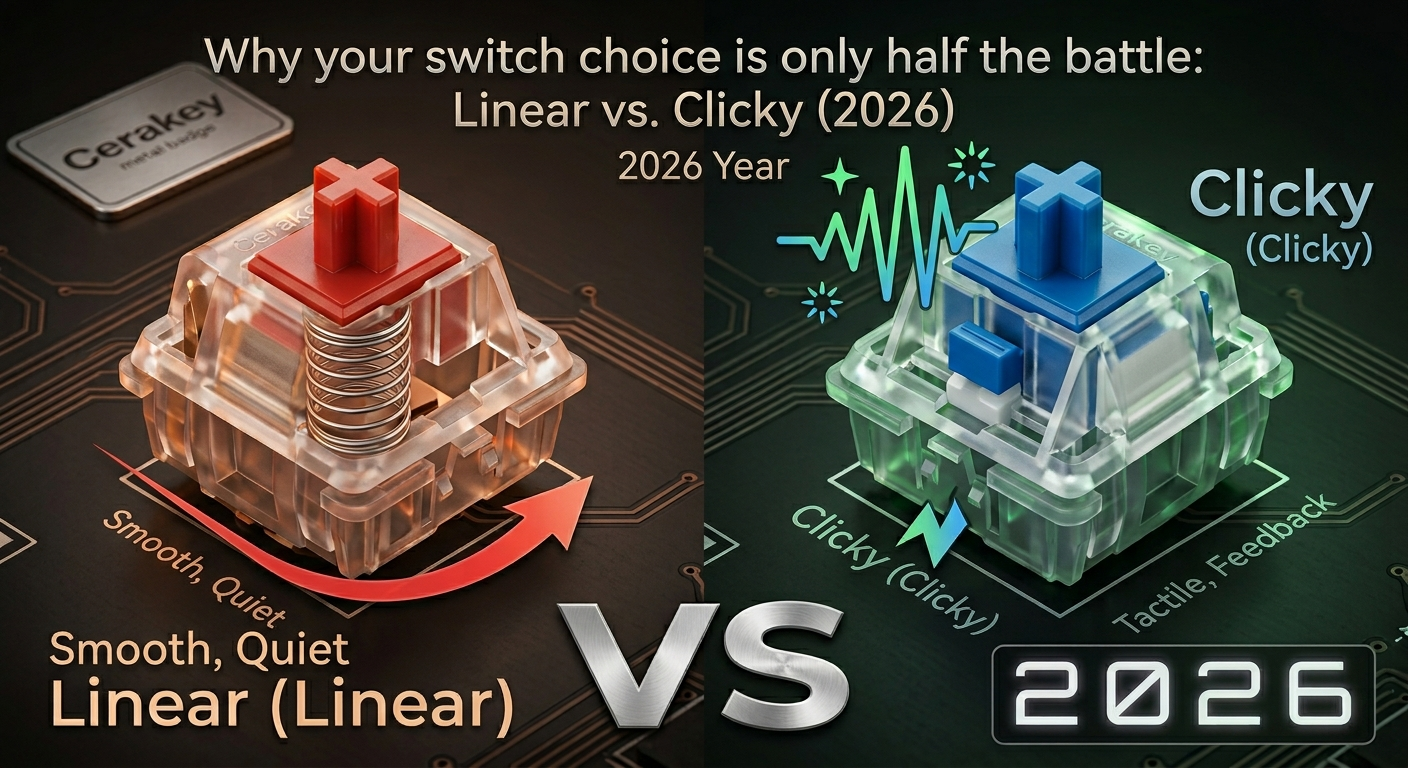
If you’ve spent any time in the mechanical keyboard community, you know the drill: the "Linear vs. Clicky" debate is practically a religion. One camp swears by the buttery, frictionless glide of a high-end linear, while the other can't live without the rhythmic, typewriter-style "snap" of a clicky switch.
But after testing hundreds of builds, I’ve realized most enthusiasts are missing the point. Choosing a switch without considering your keycap material is like putting budget tires on a Ferrari.
Here is the unfiltered truth about which switch is actually "better" and how to stop your high-end build from sounding like a plastic toy.
The Linear Reality: Chasing the "Thock"
Linear switches (think Oil Kings, Alpacas, or even classic Reds) are the darlings of the custom world. They are smooth, predictable, and fast. But they have a dark side: the hollow clack.
Because linear switches have no tactile bump, most of us "bottom out" hard. When that stem hits the housing, the vibration travels directly into your keycaps.
- The Plastic Trap: If you're using standard ABS or PBT, that vibration creates a high-pitched, thin "clack." It feels cheap, no matter how much you lubed the switches.
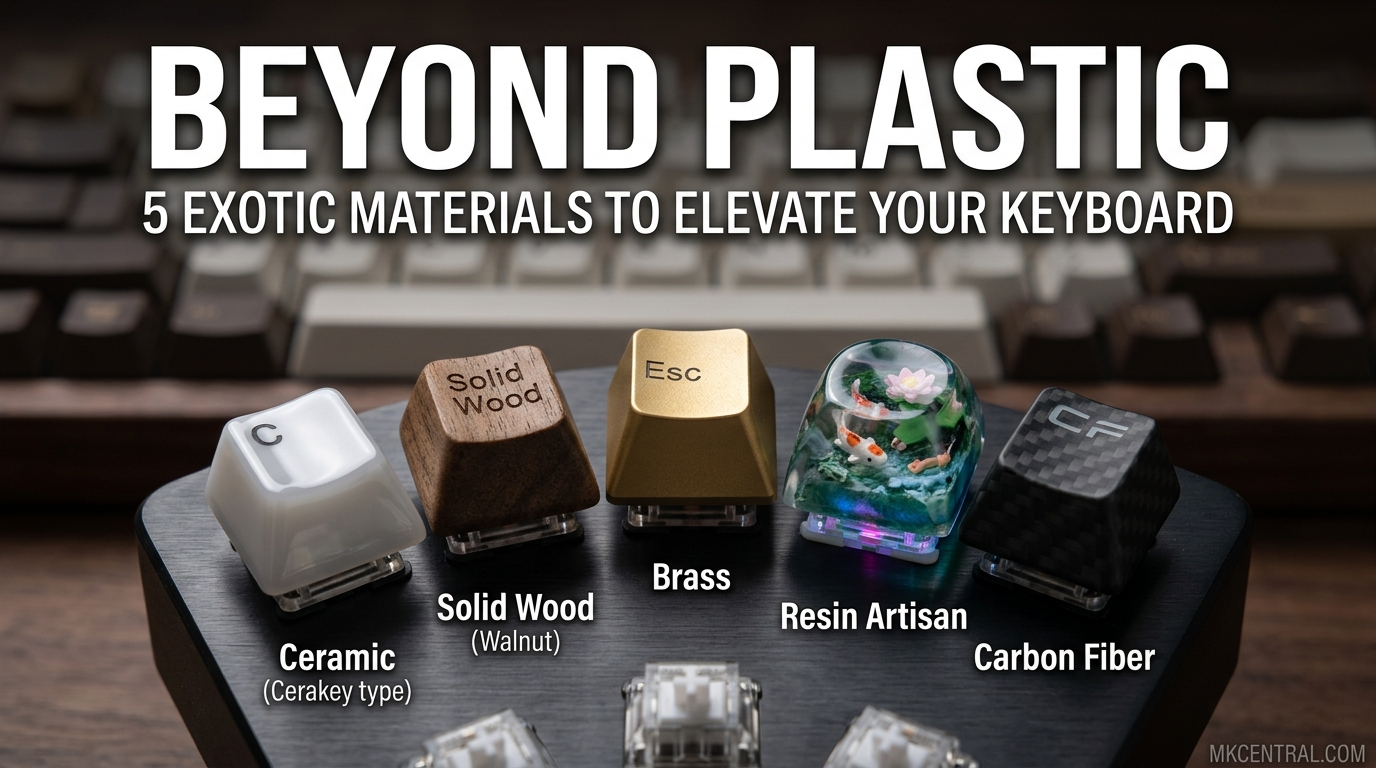
- The Ceramic Fix: This is where density changes the game. When you pair a linear switch with a high-density material like ceramic, that bottom-out vibration is instantly dampened. The result? Instead of a hollow "clack," you get a deep, marble-like "thud" that enthusiasts call Thock.
Verdict: If you want that legendary deep sound profile, Linears + Ceramic is the undisputed king.
The Clicky Dilemma: Love the Tactility, Hate the Shrill
Clicky switches (like the Kailh White Owls or Blues) are the most satisfying to type on, but they are the hardest to get "right."
The problem isn't the click itself; it’s the resonance. Most plastic keycaps act like tiny echo chambers, amplifying the highest, most annoying frequencies of the click. It’s not a "crisp snap"—it’s a "shrill rattle" that drives your coworkers (and yourself) crazy.
- The Solution: You don’t need to switch to Linears; you need better acoustics. Ceramic materials act as a natural acoustic filter. They absorb the harsh high-end frequencies while letting the low-end tactile "snap" shine through. It transforms a noisy keyboard into a sophisticated instrument.
Quick Guide: Which One Should You Actually Buy?
Don't overthink it. Choose based on your primary "mode" of existence:
- The Midnight Coder/Gamer: Go Linear. You need the speed, and you need the stealth. If you’re worried about it feeling "mushy," add the weight of a ceramic cap to give every stroke a more intentional, premium feel.
- The Afternoon Writer: Go Clicky. There is nothing like the psychological feedback of a tactile click to keep you in the "flow." Just do everyone a favor and use high-density caps to keep the pitch deep and classy.
The Verdict: Beyond the Switch
At the end of the day, a switch is just a spring and a stem. It’s 50% of the experience. The other 50% is what your fingers actually touch.
If you are debating between Clicky and Linear, you are already someone who cares about the details. Don't let a $5 plastic keycap set be the bottleneck of your typing experience. Whether you want the glide of a linear or the snap of a clicky, the material is what defines the soul of the board.
Stop settling for plastic acoustics. Explore the Ceramic Collection and hear what your favorite switch was actually meant to sound like.

Deixar comentário
Este site é protegido por hCaptcha e a Política de privacidade e os Termos de serviço do hCaptcha se aplicam.