

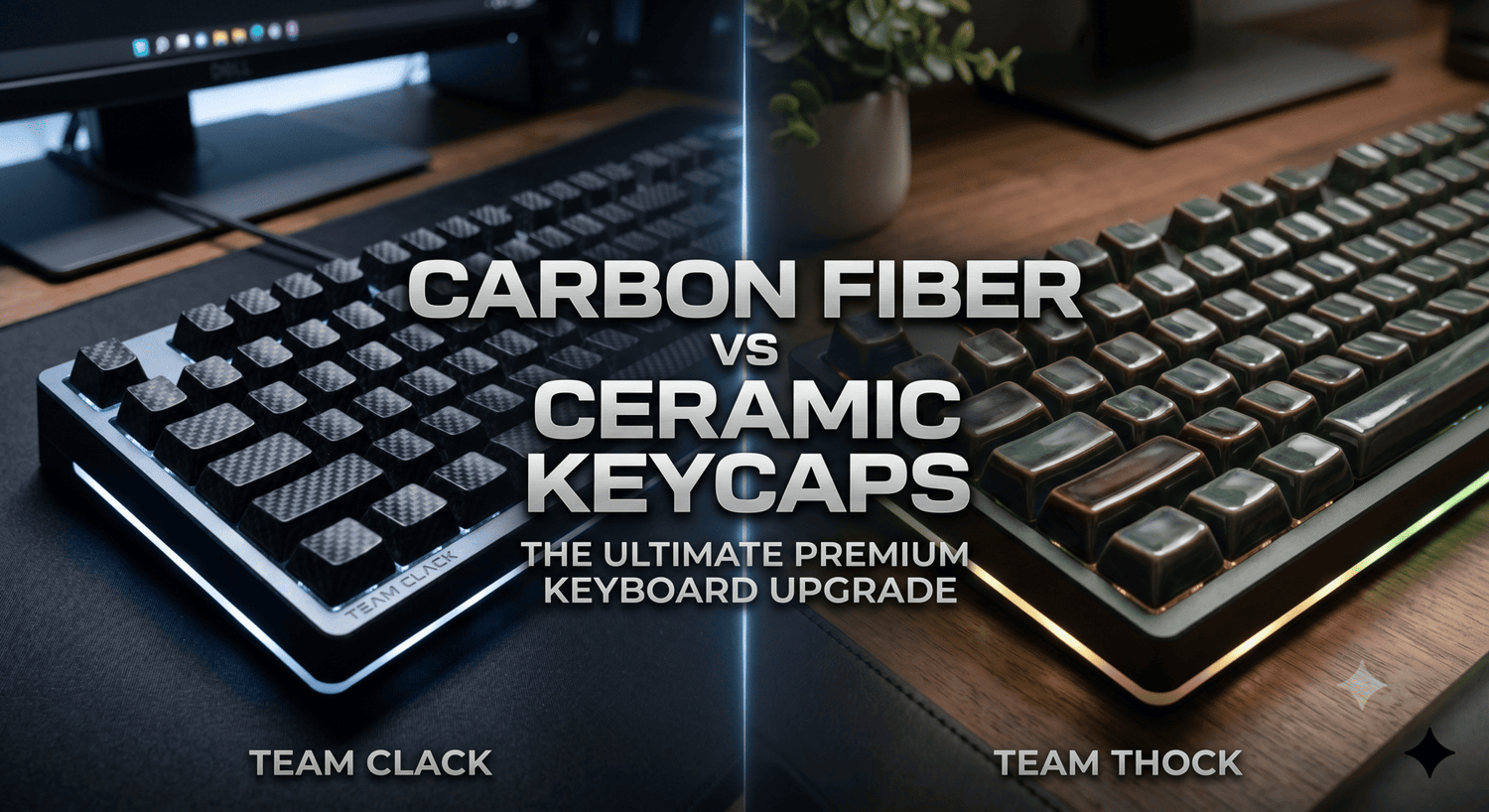
If you’ve ventured deep enough into the mechanical keyboard rabbit hole, you know that standard ABS and PBT plastic keycaps are just the tip of the iceberg. When you want a truly premium, endgame typing experience, you start looking at exotic materials.
Two of the most talked-about contenders at the high end right now are carbon fiber keycaps and ceramic keycaps.
Both promise a unique feel and aesthetic, but they sit on completely opposite sides of the spectrum when it comes to weight, sound, and typing dynamics. Let’s break down the differences so you can decide which material deserves a spot on your daily driver.
The Contenders at a Glance
Before diving into the nitty-gritty details, here is a quick overview of how these two materials stack up:
| Feature | Carbon Fiber Keycaps | Ceramic Keycaps |
| Weight | Ultra-lightweight | Heavy |
| Sound Profile | Clacky, crisp, and sharp | Deep, thocky, and marbled |
| Surface Texture | Textured matte or weave pattern | Silky smooth, cool to the touch |
| Durability | High shatter resistance, prone to minor scratches | Scratch-resistant, but can crack if dropped on hard surfaces |
| Best For | Fast typists and competitive gamers | Heavy-handed typists and "thock" enthusiasts |
Carbon Fiber Keycaps: The High-Tech Speedsters
Carbon fiber is legendary in motorsport and aerospace for its incredible strength-to-weight ratio. When translated to keyboard keycaps, it brings that same high-tech, aggressive vibe to your desk.
The Feel and Texture
Carbon fiber keycaps generally come in two finishes: a textured matte finish or a glossy coat that highlights the iconic woven look. They feel incredibly rigid. Because they are so light, they reduce the inertia required to press a key, making your switches feel slightly lighter and more responsive.
The Sound Profile
If you love a clean, crisp "clack," carbon fiber is your holy grail. The material is rigid and thin, meaning the sound bounces off it quickly. It produces a higher-pitched, sharp acoustic profile that feels tactile and precise.
Pros: Extremely durable, ultra-lightweight (great for gaming), unique industrial aesthetic, won't develop a greasy shine.
Cons: Can sound too sharp or hollow for people who prefer deep acoustics; options on the market are relatively limited.
Ceramic Keycaps: The Smooth, Thocky Heavyweights
Ceramic keycaps (often made from materials like alumina ceramic) have taken the keyboard community by storm, largely thanks to brands pioneering the space with gorgeous, colorful sets.
The Feel and Texture
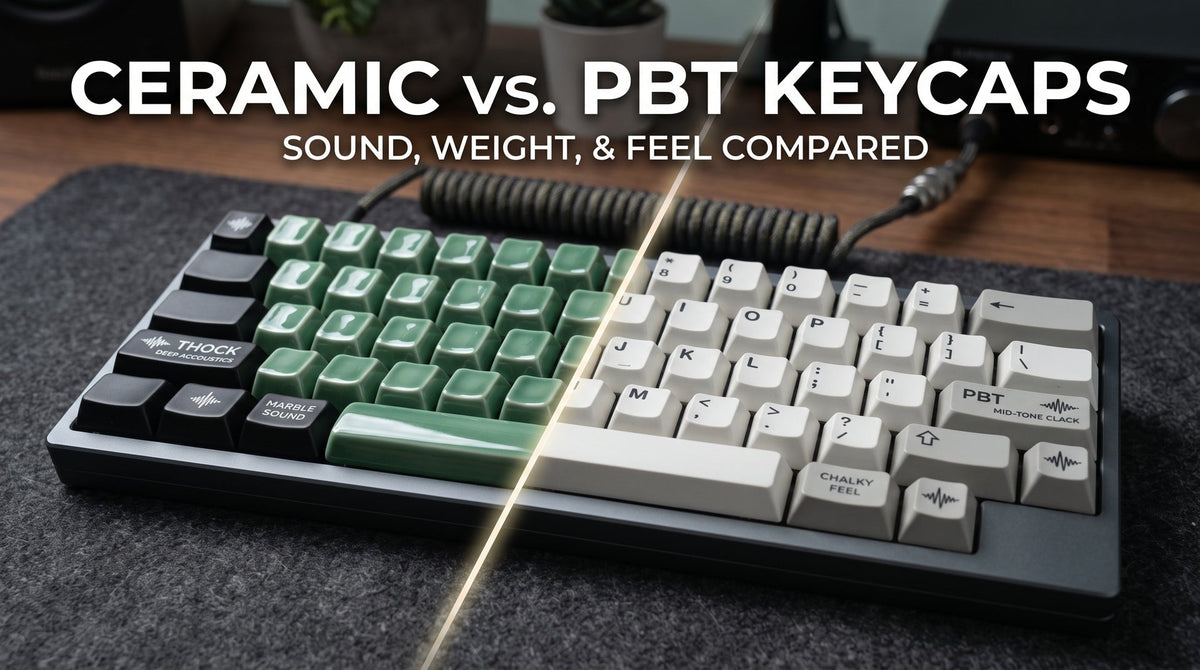
Typing on ceramic is a sensory experience. They are completely smooth and feel noticeably cool to the fingertips. Unlike plastic, they have a premium, stony density to them. However, because they are significantly heavier than plastic or carbon fiber, they will alter how your switches feel. A light linear switch might feel mushy under a heavy ceramic cap, so you often need to pair them with medium-to-heavy spring switches.
The Sound Profile
If "thock" is what you crave, ceramic keycaps deliver in spades. The dense material absorbs high-frequency frequencies, resulting in a deep, wet, marbled acoustic profile. It sounds less like a computer keyboard and more like a luxury typewriter or clinking gemstones.
Pros: Unmatched deep "thock" sound, gorgeous glazed aesthetic, incredibly smooth texture, excellent scratch resistance.
Cons: Heavy weight can overwhelm light switches; fragile if dropped on hard floors during installation; can be slippery if your hands sweat.
Head-to-Head: Which Is Better for You?
1. For the Gamer vs. The Writer
- Go with Carbon Fiber if you game competitively. The lightweight nature of the caps allows for rapid-fire inputs and quicker key reset times.
- Go with Ceramic if you write or code for hours. The smooth texture and deep acoustic feedback make long-form typing incredibly satisfying and less fatiguing on the ears.
2. The Sound Showdown
- Carbon Fiber: High-pitched, crisp, loud, tactile clack.
- Ceramic: Low-pitched, deep, acoustic, solid thock.
3. Durability and Everyday Maintenance
Carbon fiber is virtually indestructible in terms of structural integrity—it won’t crack if you drop a keycap while cleaning your board. Ceramic keycaps are incredibly scratch-resistant, but they are brittle. If you drop a ceramic escape key onto a concrete or hardwood floor, it can chip or shatter.
The Verdict
Choosing between carbon fiber and ceramic keycaps ultimately comes down to what you value most in your custom keyboard build.
If you want a sleek, modern, lightweight setup optimized for speed and a crisp acoustic pop, check out some premium carbon fiber keycap sets to give your board a racing-inspired upgrade.
On the other hand, if you want an ultra-smooth, heavy typing experience that produces the deepest bass notes possible, look into a glazed ceramic keycap upgrade to transform your desk into a luxury workstation.
Which side are you on? Are you team clack or team thock? Let us know in the comments below!
Frequently Asked Questions (FAQ)
1. Do ceramic keycaps break easily?
Ceramic keycaps are highly scratch-resistant and durable during normal typing, but they are brittle. If you drop them onto a hard surface like concrete, tile, or hardwood floors while changing keycaps, they can chip or shatter. Handle them with care during installation.
2. Will ceramic keycaps work with any mechanical switch?
They will fit on any standard MX-style stem, but their weight affects switch performance. Because ceramic is much heavier than plastic or carbon fiber, using them with very light linear switches can make the keys feel mushy or slow to return. They pair best with medium-to-heavy tactile or linear switches.
3. Do carbon fiber keycaps get oily or shiny over time?
No. Unlike standard ABS plastic keycaps which absorb skin oils and develop a greasy "shine" over time, carbon fiber is highly resistant to wear and oils. It maintains its matte texture and woven appearance even after years of heavy use.
4. Which material is better for RGB backlighting?
It depends on the specific set, but generally, ceramic keycaps offer unique lighting advantages. Many ceramic caps are slightly translucent, allowing RGB underglow to give them a beautiful, glowing "jade" effect. Carbon fiber is completely opaque, so RGB lighting will only shine around the keys rather than through them.
5. Why are these keycaps so much more expensive than PBT or ABS?
Both carbon fiber and ceramic require complex, specialized manufacturing processes compared to injection-molded plastic. Carbon fiber involves layering composite sheets and precise CNC cutting, while ceramic requires precision molding, firing at extreme temperatures, and glazing. The low production yields and premium materials drive up the cost.

Để lại bình luận
Trang web này được bảo vệ bằng hCaptcha. Ngoài ra, cũng áp dụng Chính sách quyền riêng tư và Điều khoản dịch vụ của hCaptcha.